
How to Achieve a Smooth Finish on Your Sanded Floors

Expert Tips for Professional-Quality Results in Your London Home
Introduction
Sanding your wooden floors can transform their appearance and enhance the overall look of your home. However, achieving a smooth, professional-quality finish requires careful attention to detail and the right techniques. In this guide, we’ll share expert tips to help you achieve a flawless finish on your sanded floors in your London home.
1. Prepare Your Floors Thoroughly
Proper preparation is key to achieving a smooth finish:
- Clear the Room: Remove all furniture, rugs, and personal items from the room to ensure an unobstructed work area.
- Repair Any Damage: Fill in any cracks, gaps, or holes with wood filler. Secure loose boards and replace any damaged sections.
- Clean the Floor: Sweep and vacuum the floor thoroughly to remove dust, dirt, and debris.
2. Choose the Right Sandpaper
Using the correct sandpaper grits is essential for a smooth finish:
- Start with Coarse Grit: Begin with a coarse grit (36-40) to remove old finishes and level the surface.
- Progress to Medium Grit: Use a medium grit (60-80) to smooth out scratches from the coarse grit and refine the surface.
- Finish with Fine Grit: Complete the sanding process with a fine grit (100-120) to achieve a smooth and even finish.
3. Use Proper Sanding Techniques
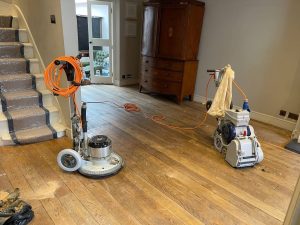
Effective sanding techniques can make a significant difference:
- Keep the Sander Moving: Always keep the sander moving to avoid creating gouges or uneven spots on the floor.
- Sand with the Grain: Sand in the direction of the wood grain to prevent scratches and achieve a smoother finish.
- Overlap Passes: Overlap each pass slightly to ensure even sanding and avoid missed spots.
- Edge and Corner Sanding: Use an edging sander or detail sander to reach edges and corners that the main sander cannot access.
4. Clean Between Sanding Passes
Cleaning the floor between sanding passes helps remove dust and debris:
- Vacuum Thoroughly: Use a vacuum cleaner with a HEPA filter to capture fine dust particles between each sanding pass.
- Wipe Down Surfaces: Wipe the floor with a damp cloth to remove any remaining dust and ensure a clean surface for the next sanding pass.
5. Apply the Finish Carefully
Applying the finish correctly is crucial for a smooth and durable result:
- Choose the Right Finish: Select a finish that suits your floor type and desired appearance. Options include oil-based, water-based, and polyurethane finishes.
- Follow Manufacturer Instructions: Carefully follow the manufacturer’s instructions for application, drying times, and curing times.
- Apply Even Coats: Apply the finish in thin, even coats using a brush, roller, or applicator pad. Avoid thick coats that can lead to uneven drying and bubbling.
- Allow Adequate Drying Time: Allow each coat to dry fully before applying the next. This ensures a smooth, even finish and prevents imperfections.
6. Buff Between Coats
Buffing between coats can enhance the final finish:
- Use a Fine Abrasive Pad: Lightly buff the floor with a fine abrasive pad or very fine sandpaper (220-grit) between coats to smooth out any imperfections.
- Clean Thoroughly: Vacuum and wipe down the floor after buffing to remove all dust and debris before applying the next coat.
7. Final Inspection and Touch-Ups
Before considering the job complete, perform a final inspection:
- Check for Imperfections: Look for any missed spots, bubbles, or uneven areas. Sand and reapply finish to these areas if necessary.
- Ensure a Smooth Finish: Run your hand over the surface to feel for smoothness. A perfectly sanded and finished floor should feel smooth to the touch.



Can You Sand Laminate Floors? Understanding the Limitations
Can You Sand Laminate Floors? Understanding the Limitations Learn How to Maintain and Care[Read more...]
How to Handle Floor Stains from Spills and Accidents
How to Handle Floor Stains from Spills and Accidents Spills and accidents are inevitable,[Read more...]
How to Clean Your Sanded Floors: Dos and Don’ts
How to Clean Your Sanded Floors: Dos and Don’ts Keep Your Wooden Floors Looking[Read more...]
How to Prepare Your Home for Floor Sanding
Preparing your home for floor sanding is a crucial step to ensure a smooth and[Read more...]
The Future of Floor Sanding: Emerging Trends and Technologies
The Future of Floor Sanding: Emerging Trends and Technologies Discover How Advancements Are Shaping[Read more...]
Gallery 02 – Sand and varnish
[Read more...]
Sep
The Best Hardwood Species for Floor Sanding
The Best Hardwood Species for Floor Sanding Enhance Your London Home’s Floors with the[Read more...]
Floor Board Fitting
Installing, Fitting, sanding and finishing different types of flooring takes a lot of work. when[Read more...]
Sep
Why Professional Floor Sanding is Worth the Investment
Why Professional Floor Sanding is Worth the Investment Discover the Benefits of Hiring Experts[Read more...]
The Impact of Floor Sanding on Home Insulation
The Impact of Floor Sanding on Home Insulation Floor sanding is a[Read more...]